


Cyber Hunting: A Practitioner Guide to Proactive Threat Hunting
Cyber hunting and alert triage address different problems. Triage responds to alerts a detection has already raised. A hunt starts earlier, from a hypothesis that an attacker is operating in the environment without having triggered any detection, then tests that idea against the available data. Put plainly, cyber hunting is the practice of proactively searching for threats that have evaded detection, starting from a hypothesis rather than an alert. Because it depends on analyst time the alert queue tends to consume first, it is often a capability teams plan for and run only occasionally.
What cyber hunting actually means
The working assumption is that a compromise may already be present. An adversary could be operating below the threshold of existing alerts, using valid credentials, living off the land, or moving slowly enough to stay under volumetric rules. A hunter selects one technique and one slice of the environment, then looks for evidence that confirms or rules out that activity. Most hunts end without a finding, and that result still has value: it shows a particular path is currently closed, and it usually exposes a visibility gap worth fixing. This is separate from adding detections, which encode known behavior into rules that fire on their own. Hunting examines the space those rules do not cover, which is why the two complement each other.
Where a hunt starts: the hypothesis
The quality of a hunt is largely set before any query runs. A vague premise, such as looking for anything suspicious in the identity logs, produces little. A specific one names a technique, a target, and an observable. For example: an attacker who has stolen a session token may reuse it from a different location, which would appear as one session ID authenticating from two distant geographies inside the token lifetime.
Useful hypotheses come from a few reliable sources: adversary behavior in the MITRE ATT&CK framework, your own past incidents, threat intelligence on techniques aimed at your sector, and the low-fidelity alerts a busy team bulk-closes, which often carry the earliest indicators of a real intrusion.
{{ebook-cta}}
Running the hunt: scope, data, pivot, confirm
Once the hypothesis is defined, a disciplined hunt moves through four stages.
- Scope. Set the time window, the data sources, and the population of hosts or identities before querying, so the hunt does not drift into an open-ended log review.
- Gather data. Pull the telemetry the hypothesis requires, often across identity, endpoint, cloud, and email at once, since the confirming evidence rarely sits in a single system.
- Pivot. Follow the evidence: an anomalous login leads to the device, the device to its recent process activity, the process to its network connections. Each step strengthens the case or rules it out.
- Confirm or close. Reach a verdict the evidence supports. Confirmed activity goes to incident response with the full trail; a closed hypothesis gets documented, including any gap observed, so the next hunter does not repeat the work.
The judgment that separates a real find from a pile of benign anomalies lives in the pivot: knowing which thread to pull, and when one has gone cold. That is why proactive threat hunting rewards senior experience.
Turning a hunt into a detection
The durable output of cyber hunting is not the individual catch but the rule it produces, so a technique hunted by hand this quarter fires automatically afterward. Hunts expose gaps, confirmed findings become new detections, those detections shrink the space that has to be searched manually, and the recovered time funds the next hypothesis.
Making time for cyber hunting
The binding constraint is usually time, not technique. A team buried in alert triage rarely reaches hunting, which is why so many programs exist on paper and seldom run. The teams that hunt consistently tend to automate routine alert investigation first, freeing senior analysts to spend judgment where it is scarce. Once every alert already receives a full, evidence-backed investigation, the question shifts from whether the team can hunt to what it will hunt next. For why programs stall and the case for directed hunting, see why threat hunting programs stall; for how the practice changes when hypotheses can run continuously, see threat hunting with AI.
A practical first step is one technique relevant to your environment: write a specific hypothesis, scope it narrowly, and run it end to end. The first detection shipped from a confirmed hunt is usually what earns the program its time.

Insights
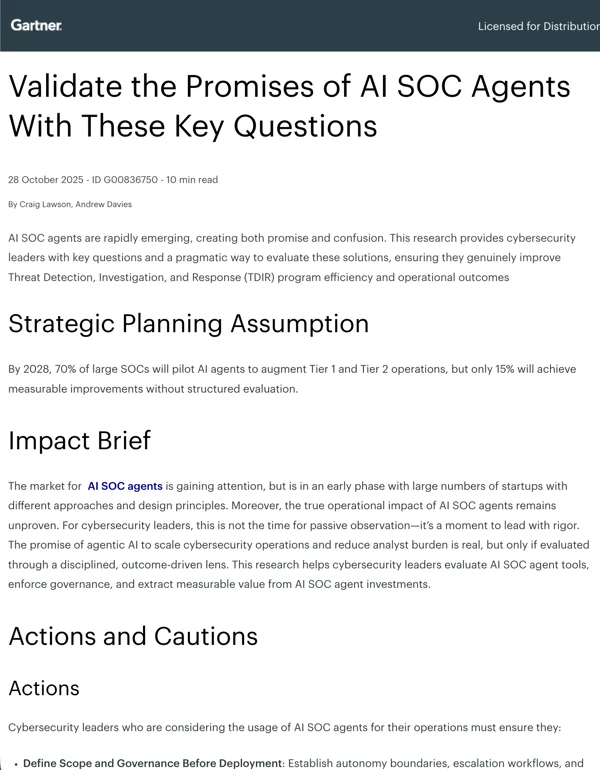
70% of SOCs will pilot AI Agents. Only 15% will see results
This Gartner research arms security operations leaders with a list of specific questions to ask vendors during evaluation

.avif)
As the Director of Product Marketing at Prophet Security, Ajmal drives marketing and growth strategies and helps security professionals see how AI is transforming security operations.